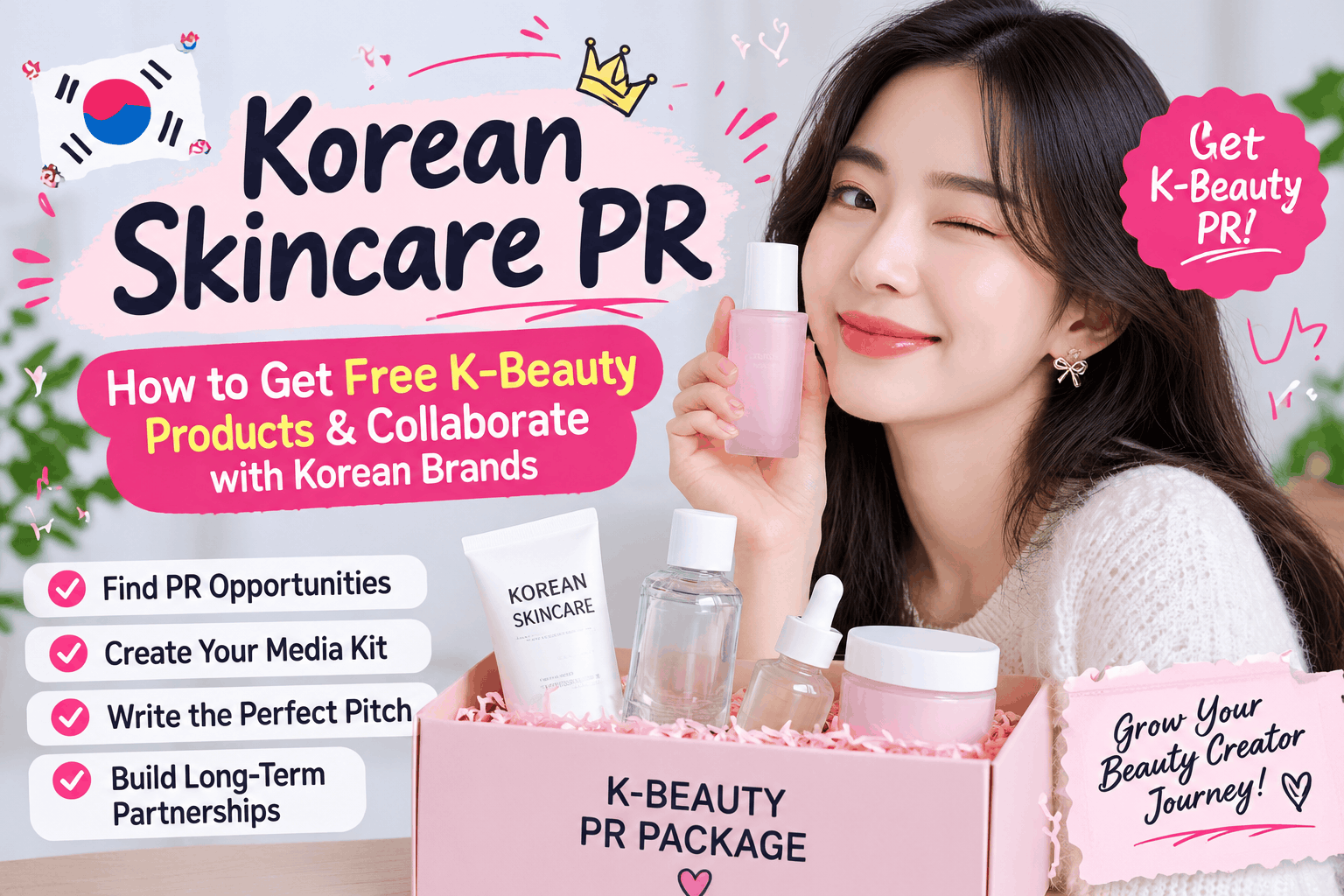
Korean Skincare PR Opportunities: A Guide for Small Influencers
Introduction
Korean beauty has become a favorite among skincare lovers, beauty influencers, content creators, and people searching for effective products to improve their skincare routines. From hydrating toners and lightweight sunscreens to soothing serums and nourishing moisturizers, Korean skincare brands offer a wide variety of products for different skin types and concerns.
As interest in K-beauty continues to grow, more creators want to work with Korean skincare brands, receive product samples, and build long-term relationships with companies they genuinely admire. These opportunities can help creators discover new products, produce engaging content, and establish themselves in the beauty industry.
However, getting noticed by a brand takes more than having a beautiful Instagram feed or a large number of followers. Brands often look for authentic recommendations, consistent content, audience engagement, and creators who understand their products.
If you are interested in korean skincare pr, this guide will explain how beauty creators can discover collaboration opportunities, prepare professional pitches, build a portfolio, and improve their chances of receiving skincare products for content creation.
Whether you are a beginner, a micro-influencer, a skincare blogger, or an established beauty creator, the right strategy can help you approach brands with greater confidence.
What Is Korean Skincare PR?
Korean skincare PR refers to public relations activities that help Korean beauty brands introduce their products, build brand awareness, and connect with consumers through media coverage, influencer partnerships, product gifting, and social media content.
One common approach is product seeding. A brand sends selected creators skincare products so they can try them and potentially share their experiences with their audiences. Depending on the arrangement, the products may be gifted without a posting requirement, provided in exchange for agreed content, or included in a paid campaign.
Not every product package represents the same type of collaboration. Some opportunities are informal gifting arrangements, while others require specific deliverables, deadlines, usage rights, or promotional disclosures.
For creators, these distinctions are important. Receiving a complimentary product does not automatically mean that a brand expects a positive review or that every PR opportunity is unpaid.
Korean beauty companies may work directly with creators, through public relations agencies, through regional distributors, or through retailers that carry multiple skincare brands. The correct contact depends on the company’s structure and the market it serves.
Understanding these different pathways makes it easier to approach suitable brands and avoid wasting time on irrelevant applications.
Why Korean Skincare Brands Work With Content Creators
Beauty brands need ways to introduce their products to people who are actively interested in skincare. Creators can help by explaining product textures, demonstrating application techniques, discussing ingredients, and showing how products fit into everyday routines.
A useful skincare video can answer questions that a standard advertisement might not address. For example, viewers may want to know whether a moisturizer feels lightweight, how a toner layers with other products, or what packaging looks like in real life.
Creators also help brands reach specific communities. Someone who consistently publishes content about sensitive skin may be a better fit for a gentle skincare line than a general lifestyle account with a larger but less relevant audience.
Several qualities can make a creator attractive to a brand:
- Authenticity: Honest opinions and transparent recommendations help build audience trust.
- Consistent content: Regular skincare posts show that beauty is an ongoing interest rather than a temporary trend.
- Product knowledge: Understanding ingredients, product categories, and intended uses helps creators communicate responsibly.
- Engagement: Meaningful comments, saves, shares, and questions can indicate that followers value the content.
- Content quality: Clear images, good lighting, useful demonstrations, and readable captions make products easier to understand.
- Audience relevance: A well-matched audience can be more valuable than a high follower count alone.
You do not need to be a celebrity to begin building relationships with skincare brands. A smaller creator with a focused audience and a strong portfolio can still offer useful content.
How to Find Korean Skincare PR Opportunities
Finding suitable opportunities starts with research. Instead of contacting every company you discover, focus on brands whose products, values, and target customers match your content.
1. Research Korean Beauty Brands
Begin by creating a list of Korean skincare brands you genuinely like or want to explore. Research their official websites, product collections, social media accounts, and existing creator collaborations.
You might investigate established brands such as COSRX, Beauty of Joseon, Laneige, Innisfree, Round Lab, Torriden, or SKIN1004. These are examples to research, not a guarantee that they currently accept unsolicited applications or send products to every creator.
Look for official pages titled “Collaborations,” “Influencer Program,” “Ambassador Program,” “Press,” or “Contact.” Some brands maintain dedicated creator application forms, while others manage partnerships through regional marketing teams.
Read the eligibility requirements carefully. A program may accept creators from particular countries, require a public social media account, or focus on specific platforms.
2. Explore Korean Beauty Retailers
Retailers can be another useful starting point because they carry products from multiple brands. Some operate their own affiliate, ambassador, or creator programs, which may provide access to several skincare companies through one relationship.
Research retailers that serve your country and check their official websites for current partnership opportunities. Review whether they accept international creators, whether shipping is available in your location, and whether the program involves product gifting, commission, or paid content.
Do not assume that a retailer’s affiliate program includes free products. Read the terms and conditions before applying.
3. Follow Brands on Social Media
Instagram, TikTok, YouTube, and other social platforms can help you discover how brands work with creators.
Pay attention to product launches, creator campaigns, giveaway announcements, ambassador recruitment, and posts featuring smaller influencers. When a brand publishes application instructions, follow the official process rather than sending repeated direct messages.
You can also engage naturally with brand content by leaving thoughtful comments or asking relevant product questions. Meaningful interaction can help you understand the company’s communication style, although it does not guarantee a collaboration.
4. Search for Official Regional Distributors
Some Korean skincare companies use distributors or regional offices to manage marketing outside South Korea. A creator living in Bangladesh, for example, may need to check whether a brand has an authorized local distributor or a regional partnership contact.
This is especially important when international shipping, customs fees, product availability, or local advertising requirements affect a campaign.
Always verify that the contact belongs to the company or an authorized partner before sharing personal information.
How to Prepare Your Profile Before Contacting Brands
Your profile is often the first thing a brand reviews after receiving a pitch. It should clearly explain who you are, what kind of content you create, and why your audience might be interested in skincare products.
Create a Focused Beauty Profile
Your account does not need to look identical to every other beauty influencer’s page. Instead, make sure visitors can quickly understand your niche.
You might specialize in beginner skincare routines, product reviews, ingredient education, sunscreen demonstrations, affordable beauty finds, or Korean skincare discoveries.
Choose a consistent visual style that suits your personality. Use clear photos, readable text, and helpful captions. Avoid making unsupported claims about product performance or promising results that you cannot substantiate.
Publish Content Before Asking for PR
One of the most effective ways to demonstrate your abilities is to create useful content with products you already own.
For example, publish a skincare routine, a moisturizer texture demonstration, an ingredient explainer, or a comparison of different toner formats. You can also create educational posts explaining how to introduce new products gradually.
Your goal is to show brands what you could create if they sent you a product. You do not need an expensive collection to begin. A few thoughtful, well-produced posts can demonstrate your creativity and communication skills.
Build a Simple Media Kit
A media kit is a short document that introduces you as a creator. It can include:
- Your name or creator brand and contact information.
- Your main social media platforms.
- Your niche and the audience you serve.
- Your follower count and relevant audience demographics.
- Engagement and content performance metrics.
- Examples of your best skincare posts.
- Previous collaborations, if applicable.
- The types of content you can produce.
Be honest about your statistics. If you are new, explain your content focus and creative strengths rather than inventing experience or inflating numbers.
A professional media kit does not need elaborate graphics. Clear information and relevant examples are more important than complicated design.
Personalize every message before sending it. If the brand has a formal application process, use that process instead of bypassing it with repeated emails.
If you do not receive a response, you can send one polite follow-up after a reasonable interval, such as seven to fourteen business days. If there is still no reply, move on to other opportunities.
What to Include in Your Korean Skincare PR Content
Getting a product is only one part of a successful creator relationship. The content you produce should help viewers understand the product and make informed decisions.
A useful review can include the product name, packaging, texture, application method, ingredient information from reliable sources, and your personal experience.
For example, when reviewing a hydrating serum, describe its consistency, how it spreads, how it feels after application, and how it fits into your routine. If you have used it for a limited time, explain that limitation rather than claiming long-term results.
For sunscreen content, communicate the labeled sun protection information accurately and avoid suggesting that a product eliminates all sun damage.
You can create several content formats from one product, depending on your agreement with the brand:
- A first-impressions video.
- A product texture and application demonstration.
- A step-by-step skincare routine.
- An ingredient-focused educational post.
- A detailed written review.
- A comparison with products you have already tried.
- A follow-up discussing your experience over time.
Only promise deliverables that you can realistically complete. Before agreeing to a campaign, clarify the deadline, number of posts, approval process, usage rights, exclusivity, payment, and whether the brand expects a particular posting schedule.
Common Mistakes to Avoid When Applying for PR
Many creators make avoidable mistakes when approaching beauty companies. Being professional and realistic can help you stand out.
Focusing only on follower numbers: A smaller, engaged audience can be valuable. Highlight the quality, relevance, and performance of your content.
Sending generic messages: A personalized pitch demonstrates that you have researched the brand and understand its products.
Requesting too many products immediately: Start by proposing a realistic collaboration instead of asking for an extensive package before establishing a relationship.
Making unsupported skincare claims: Avoid promising that a product will cure acne, remove pigmentation, or produce guaranteed results. Describe verified product information and your own experience responsibly.
Ignoring campaign requirements: Read application rules and clarify deliverables before accepting a collaboration.
Failing to disclose gifted products: Clearly disclose free products, payments, affiliate relationships, and other material connections when required by applicable law and platform policies.
Paying suspicious PR fees: Be cautious of unsolicited messages that demand shipping payments, membership fees, or sensitive personal information in exchange for guaranteed access to brand partnerships. Verify opportunities through official channels before proceeding.
Giving only positive feedback: Never agree to provide a dishonest review. A trustworthy creator communicates fairly and respects the difference between a genuine opinion and an advertisement.
How to Build Long-Term Relationships With K-Beauty Brands
A single product package can be exciting, but a professional relationship may create more valuable opportunities over time.
If a brand sends you products, communicate clearly, follow any agreed deadlines, and deliver the content you promised. Once your post is live, share the link with your contact and provide relevant performance information when appropriate.
You can include meaningful metrics such as views, saves, shares, comments, watch time, or link clicks. Focus on metrics that relate to the campaign’s goals rather than presenting every statistic available.
If the collaboration goes well, thank the team and express interest in future launches or campaigns. Keep a record of your previous work so you can demonstrate your experience when approaching other companies.
You should also understand that receiving gifted products does not automatically create an obligation to work for free indefinitely. If a company requests extensive production, advertising usage, exclusivity, or multiple deliverables, discuss compensation and terms before agreeing.
Creators can gradually develop from product-seeding collaborations to affiliate partnerships and paid campaigns. Progress depends on the brand, market, creator’s work, and campaign results; there is no guaranteed timeline.
How Content AI Can Help Optimize Your Skincare Blog
Content optimization tools can help you organize a beauty article, identify related topics, and improve on-page SEO. If you use Content AI or an SEO plugin with similar features, treat its recommendations as guidance rather than instructions to repeat keywords unnaturally.
Start with a clear primary keyword and build supporting phrases around the searcher’s needs. Relevant related terms for this article include Korean beauty brands, skincare PR packages, K-beauty influencers, gifted skincare products, beauty creator collaborations, influencer outreach, and skincare product reviews.
Use the primary phrase in an appropriate title and a natural place in the introduction. Organize the rest of the article with descriptive headings, concise paragraphs, and useful examples.
Content AI may also suggest related questions, missing subtopics, internal links, and readability improvements. Review each suggestion manually to make sure it improves the article for real readers.
For Beautywellex, consider linking this post to relevant articles about skincare routines, product reviews, ingredient guides, and beauty tips if those pages exist on your website. Use descriptive anchor text that explains what readers will find when they click.
Before publishing, check the final word count, spelling, headings, meta description, mobile readability, and links. Add original images where appropriate, use descriptive alt text, and avoid publishing repetitive or unsupported information simply to achieve a higher optimization score.
No SEO tool can guarantee a particular ranking. Strong optimization combines relevant information, helpful writing, a technically sound page, and a clear match with search intent.
Frequently Asked Questions
1. Can beginners receive Korean skincare PR packages?
Yes, beginners can apply to suitable creator programs, although acceptance depends on each brand’s requirements. Start by publishing consistent beauty content, creating a portfolio, and researching companies that welcome emerging creators. A large following is not a universal requirement, but relevant content and professionalism can improve your application.
2. Do Korean skincare brands send free products to small influencers?
Some brands and retailers offer product seeding or creator programs that may include complimentary products. However, eligibility, shipping arrangements, posting requirements, and availability vary. Always check official program terms instead of assuming every company offers free products.
3. Where can I find legitimate skincare PR opportunities?
Start with official brand websites, verified social media accounts, authorized distributors, and retailer creator programs. Look for clearly stated application requirements and campaign terms. Verify unexpected offers directly with the company, especially when someone requests payment or sensitive information.
4. Do I need to buy products before contacting a brand?
No. You can research a brand and explain why its products suit your content without purchasing its entire collection. However, never claim to have used a product when you have not. If you already own and genuinely use one of its products, your experience may provide a more specific starting point for a collaboration pitch.
5. How often should I contact skincare brands?
Prioritize relevant opportunities over sending large numbers of repetitive messages. Follow each company’s application rules, keep track of your outreach, and send a polite follow-up only when appropriate. Consistently improving your content and portfolio is generally more useful than repeatedly contacting the same team.
Final Thoughts
Building relationships with Korean beauty brands takes preparation, patience, and genuine interest in skincare. You do not need to begin with thousands of followers or a professional studio. Start with useful content, a clear creator profile, and thoughtful communication.
A strong korean skincare pr strategy is about more than receiving complimentary products. It involves finding brands that match your audience, explaining what makes your content valuable, and building trust through honest recommendations and reliable collaboration.
Research official opportunities, prepare a concise media kit, and send personalized pitches that demonstrate your understanding of each brand. When you receive an opportunity, respect the agreement, disclose partnerships appropriately, and create content that helps your audience make informed choices.
With consistent effort, a professional approach, and realistic expectations, you can build a stronger beauty portfolio and position yourself for future product-seeding opportunities, affiliate partnerships, and paid skincare collaborations.
Beauty content works best when it combines creativity with transparency. Focus on providing genuine value to your audience, and let the quality of your work support your long-term growth in the beauty industry.