

What Are Common Skin Issues: and Their Treatments
What Are Common Skin Issues: Understanding and Managing Skin Problems
Our skin is the largest organ in our body and serves as a protective barrier against the outside world. It keeps us safe from harmful bacteria, viruses, and pollutants. However, sometimes our skin can develop problems that cause discomfort or affect its appearance. In this blog, we will discuss some of the most common skin issues people face and provide simple explanations to help you understand what causes them and how to manage them.
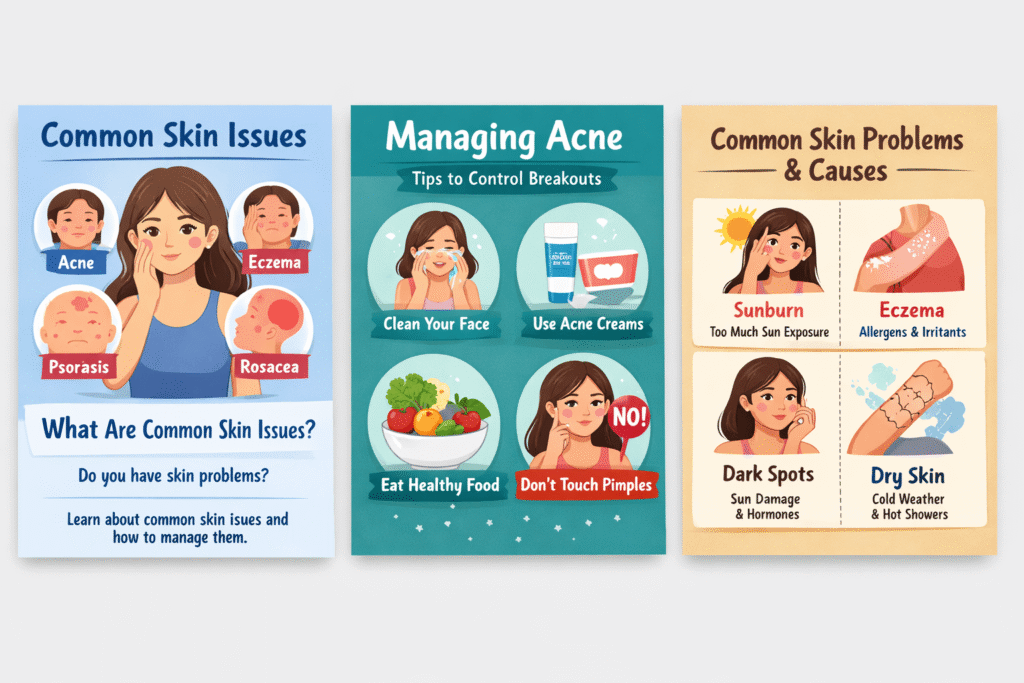
1. Acne: Understanding Breakouts
What is acne?
Acne is one of the most common skin problems, especially among teenagers, but adults can experience it too. Acne occurs when hair follicles in the skin become clogged with oil, dead skin cells, and sometimes bacteria. This clogging leads to pimples, blackheads, and cysts, often on the face, back, and shoulders.
Causes of acne:
-
Hormones: During puberty or pregnancy, the body produces more hormones, which can lead to excess oil production in the skin, causing acne.
-
Stress: Stress can increase hormone levels, making acne worse.
-
Diet: Foods with a high glycemic index, like sugar, can make acne worse.
-
Poor skincare: Not washing your face properly or using harsh products can contribute to acne.
How to manage acne:
-
Cleanse your skin: Wash your face with a gentle cleanser twice a day to remove dirt and excess oil.
-
Use acne treatment products: Over-the-counter creams with ingredients like benzoyl peroxide or salicylic acid can help control acne.
-
Avoid squeezing pimples: Squeezing pimples can make acne worse by pushing bacteria deeper into the skin.
-
Eat a healthy diet: Avoid sugary foods and drink plenty of water to keep your skin hydrated.
2. Eczema: Red, Itchy Skin
What is eczema?
Eczema, also called atopic dermatitis, is a condition that causes red, itchy, and dry skin. It can appear anywhere on the body, but it’s most common on the arms, legs, and face. Eczema often starts in childhood and can last into adulthood. The skin becomes inflamed and irritated, making it hard to resist scratching.
Causes of eczema:
-
Genetics: Eczema often runs in families, meaning if your parents have eczema or other skin conditions like asthma, you may be more likely to develop it.
-
Environmental factors: Things like harsh weather, allergens, and pollution can trigger eczema flare-ups.
-
Irritants: Certain soaps, perfumes, and fabrics like wool can cause irritation on sensitive skin.
How to manage eczema:
-
Moisturize: Use thick moisturizers like creams or ointments to keep your skin hydrated and reduce dryness.
-
Avoid triggers: Stay away from things that irritate your skin, such as harsh chemicals, strong soaps, and allergens.
-
Take lukewarm baths: Hot water can make eczema worse, so use lukewarm water when bathing.
-
Use gentle skincare products: Choose fragrance-free and hypoallergenic products to avoid irritation.
3. Psoriasis: Scaly, Thick Patches
What is psoriasis?
Psoriasis is a chronic skin condition that causes skin cells to grow too quickly. This leads to the buildup of thick, scaly patches on the skin, usually on the scalp, elbows, and knees. These patches can be red or silver in color and can be itchy or painful.
Causes of psoriasis:
-
Immune system: Psoriasis happens when the immune system mistakenly attacks healthy skin cells, causing them to multiply too fast.
-
Genetics: Psoriasis can run in families, so if your parents have it, you are more likely to get it.
-
Triggers: Stress, infections, certain medications, and injuries to the skin can trigger psoriasis outbreaks.
-
Use topical treatments: Steroid creams, vitamin D ointments, or coal tar can help reduce the inflammation and scaling.
-
Take warm baths: Adding oatmeal or Epsom salts to your bath can soothe the skin and reduce irritation.
-
Avoid triggers: Managing stress and avoiding infections can help prevent flare-ups.
-
Seek professional help: If over-the-counter treatments don’t work, consult a dermatologist for stronger medications or therapies.
4. Rosacea: Red, Bumpy Skin
What is rosacea?
Rosacea is a condition that causes redness on the face, especially around the nose, cheeks, and forehead. It can also cause visible blood vessels, bumps, and pimples. Rosacea is more common in fair-skinned people and typically affects adults aged 30-50.
Causes of rosacea:
-
Genetics: Rosacea often runs in families, so if someone in your family has it, you may be at risk.
-
Environmental factors: Sun exposure, wind, hot weather, and stress can trigger rosacea flare-ups.
-
Food and drink: Spicy foods, alcohol, and hot drinks can make rosacea symptoms worse.
How to manage rosacea:
-
Use gentle skincare products: Avoid harsh products that can irritate the skin, and choose products designed for sensitive skin.
-
Protect your skin from the sun: Use sunscreen daily to protect your skin from sun damage.
-
Avoid triggers: If certain foods or drinks cause flare-ups, try to avoid them.
-
Consult a dermatologist: A dermatologist can prescribe topical medications or oral antibiotics to reduce symptoms.
5. Sunburn: Skin Damage from the Sun
What is sunburn?
Sunburn is caused by overexposure to the sun’s ultraviolet (UV) rays. It results in red, painful, and sometimes blistered skin. Sunburn can occur after just a few hours in the sun without protection.
Causes of sunburn:
-
Sun exposure: Too much time in the sun without sunscreen or protection causes the skin to burn.
-
Fair skin: People with fair skin are more prone to sunburn because their skin has less melanin, the pigment that protects against UV rays.
How to manage sunburn:
-
Cool the skin: Apply cool compresses or take a cool bath to soothe the skin.
-
Moisturize: Use aloe vera gel or a moisturizing lotion to keep the skin hydrated.
-
Stay out of the sun: Avoid further sun exposure until the skin heals.
6. Dark Spots: Uneven Skin Tone
What are dark spots?
Dark spots, also known as hyperpigmentation, are areas of the skin that become darker than the surrounding skin. These spots are often caused by an excess production of melanin, the pigment responsible for skin color.
Causes of dark spots:
-
Sun exposure: Spending too much time in the sun without protection can cause dark spots.
-
Acne scars: After acne clears up, dark spots can remain on the skin.
-
Hormonal changes: Pregnancy, birth control pills, or menopause can cause hormonal changes that lead to dark spots.
How to manage dark spots:
-
Use sunscreen: Protect your skin from the sun every day to prevent new dark spots.
-
Try brightening products: Look for creams or serums with ingredients like vitamin C, niacinamide, or retinol to lighten dark spots.
-
Be patient: It can take several weeks or months for dark spots to fade.
7. Dry Skin: Skin That Feels Tight and Flaky
What is dry skin?
Dry skin occurs when your skin doesn’t produce enough oil to keep it moisturized. It can feel tight, rough, and sometimes itchy. In severe cases, the skin may crack or bleed.
Causes of dry skin:
-
Cold weather: Dry, cold air can strip moisture from the skin.
-
Hot showers: Long, hot showers can remove natural oils from the skin.
-
Harsh skincare products: Soaps with strong chemicals can dry out the skin.
-
Health conditions: Eczema and psoriasis can also cause dry skin.
How to manage dry skin:
-
Moisturize regularly: Apply a thick moisturizer to your skin after bathing to lock in moisture.
-
Use gentle skincare products: Avoid products with alcohol or fragrances that can dry out the skin.
-
Avoid hot water: Take shorter, lukewarm showers to prevent drying out your skin.
8. Skin Allergies: Itchy, Red Skin
What are skin allergies?
Skin allergies occur when the skin reacts to substances like certain foods, pollen, or products. This can cause redness, swelling, itching, and sometimes a rash.
Causes of skin allergies:
-
Food allergies: Certain foods, like nuts or shellfish, can cause allergic reactions on the skin.
-
Contact dermatitis: This happens when the skin comes into contact with an allergen, such as poison ivy or certain cosmetics.
-
Insect stings or bites: These can cause allergic reactions that result in swelling or redness.
How to manage skin allergies:
-
Identify triggers: Try to find out what is causing the allergic reaction and avoid it.
-
Use antihistamines: Over-the-counter antihistamines can help reduce itching and swelling.
-
Apply anti-itch cream: Hydrocortisone cream or calamine lotion can relieve itching.
Conclusion
Skin issues are common and can affect people of all ages. The most important thing to remember is that many skin problems can be managed with proper care, lifestyle changes, and, in some cases, medical treatment. If you have a skin condition that doesn’t improve with over-the-counter treatments, it’s a good idea to see a dermatologist for professional advice. Taking care of your skin is essential for your overall health and well-being, and with the right approach, you can keep your skin healthy and glowing.




5 Comments