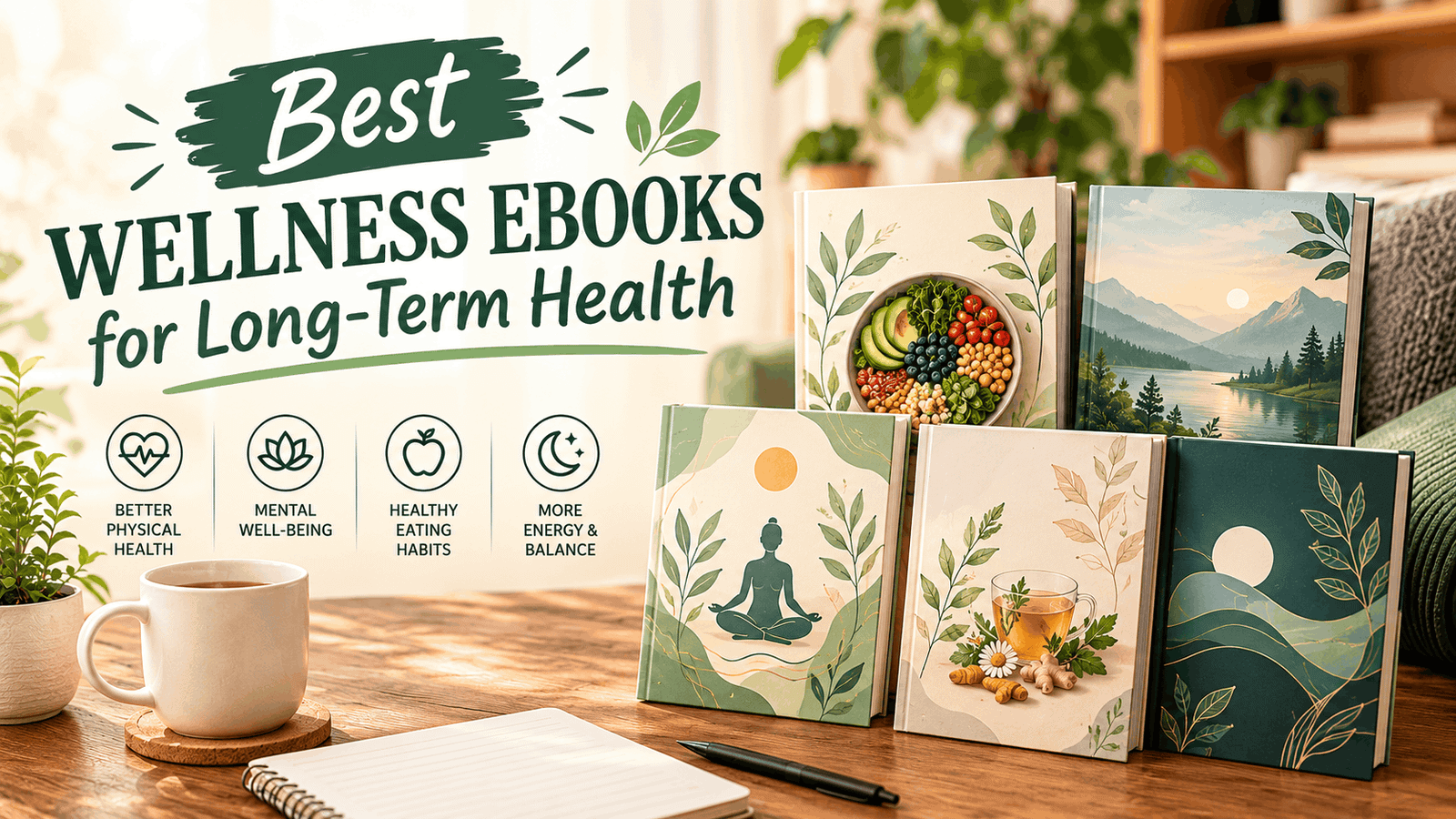
Best Wellness Ebooks for Long-Term Health: A Practical Guide
Best Wellness Ebooks for Long-Term Health: A Practical Guide to Everyday Well-Being
Introduction
Good health is not built in a single day. It grows from the small choices we make every morning, the food we eat, the way we manage stress, how much we move, and the quality of our sleep. While many people focus on quick solutions, lasting wellness usually comes from simple habits that can be maintained over time.
This is where wellness ebooks can be helpful. They give readers convenient access to practical information about nutrition, fitness, mental well-being, sleep, mindfulness, and healthy lifestyle changes. Instead of searching through countless websites, you can use a well-organized ebook to learn about a topic and turn useful ideas into everyday routines.
The best wellness ebooks for long-term health are not necessarily the longest or most complicated ones. The most useful guides explain important concepts clearly, offer realistic suggestions, and help readers make gradual progress without feeling overwhelmed.
In this article, we will explore the types of wellness ebooks worth considering, the subjects they should cover, and how to use what you learn to support your well-being over the years.
Why Long-Term Wellness Matters
Wellness is about more than avoiding illness. It includes physical health, emotional balance, mental well-being, sleep, social connection, and the ability to manage everyday responsibilities.
When you take care of these areas, daily life may become easier to manage. You might feel more energetic, develop a steadier routine, improve your sleep habits, or become more aware of how stress affects your mood.
Long-term wellness also requires patience. A short exercise routine may be helpful, but its lasting value depends partly on whether you can continue it. Similarly, learning about healthy meals is useful when the information helps you make realistic food choices throughout the week.
According to the Centers for Disease Control and Prevention, regular physical activity, balanced eating, sufficient sleep, and preventive healthcare can support health and help reduce the risk of several chronic conditions. These habits work best as part of an overall lifestyle rather than as isolated solutions.
Wellness ebooks can make the learning process more convenient. You can read a few pages during a break, revisit a checklist when planning your week, or use a guided journal to reflect on your progress. The goal is to turn reliable information into habits that fit your life.
1. Nutrition Ebooks for Better Everyday Eating
Food plays an important role in everyday health. However, understanding nutrition can feel confusing when different sources promote conflicting diets, strict meal plans, or unnecessary restrictions.
A good nutrition ebook should make healthy eating easier to understand. It should explain balanced meals, food variety, portion awareness, hydration, and practical meal planning without suggesting that one diet is perfect for everyone.
Look for guides that cover topics such as:
- Building balanced meals with vegetables, fruits, whole grains, and suitable protein sources.
- Understanding dietary fiber, healthy fats, and essential nutrients.
- Planning affordable meals for busy weekdays.
- Preparing simple snacks that help you feel satisfied.
- Making gradual changes without following extreme restrictions.
For example, a nutrition guide might suggest planning a few meals before grocery shopping. This small step can help reduce last-minute decisions and make it easier to include a wider variety of foods.
Be cautious of ebooks that promise dramatic weight loss, claim to cure diseases through food, or encourage eliminating entire food groups without a clear medical reason. Individual needs differ, especially for people with allergies, medical conditions, or specific nutritional requirements.
A useful guide should educate rather than shame readers about their food choices. Healthy eating needs to be practical enough to continue during busy weeks, family gatherings, and changing circumstances.
2. Fitness Ebooks for Sustainable Movement
Exercise does not have to mean spending hours in a gym. Walking, cycling, dancing, swimming, home workouts, and strength exercises can all contribute to a more active lifestyle.
Fitness ebooks can help beginners understand different forms of movement and develop a routine that matches their abilities. The most helpful resources explain proper technique, gradual progression, rest, and ways to make activity part of a normal day.
When choosing a fitness guide, look for:
- Beginner-friendly exercise instructions.
- Clear descriptions or illustrations of movements.
- Flexible routines for different schedules.
- Guidance on warm-ups, recovery, and rest days.
- Modifications for different fitness levels.
A practical ebook might offer a simple weekly plan that combines walking with a few strength sessions. You can adjust the schedule according to your experience, available time, and personal circumstances.
The CDC recommends that adults generally aim for at least 150 minutes of moderate-intensity aerobic activity each week, along with muscle-strengthening activities on two days. People who are new to exercise can start with manageable amounts and build gradually.
You do not need to achieve every goal immediately. A short walk during lunch or taking the stairs when appropriate can be a useful starting point. If you have an injury, a chronic condition, or concerns about exercise safety, seek advice from a qualified healthcare professional.
3. Mental Wellness and Stress Management Ebooks
Mental well-being is an important part of overall health. Work pressure, financial responsibilities, family commitments, and constant digital notifications can make it difficult to relax and focus.
Mental wellness ebooks can introduce readers to practical ways of recognizing stress, setting boundaries, organizing responsibilities, and making time for rest.
Helpful topics include:
- Identifying common sources of everyday stress.
- Practicing simple breathing and relaxation exercises.
- Developing a healthier relationship with technology.
- Using journaling to understand thoughts and emotions.
- Creating realistic boundaries between work and personal time.
- Building routines that allow space for rest and enjoyable activities.
For example, a stress management guide might encourage you to take a few quiet minutes after work before moving into your evening routine. Another might provide prompts for writing down worries and identifying one manageable next step.
These techniques can support everyday coping, but they are not substitutes for professional mental healthcare. Persistent anxiety, depression, or emotional distress deserves appropriate support.
When evaluating a mental wellness ebook, check whether its advice is responsible and realistic. Avoid resources that promise to eliminate all stress or suggest that difficult emotions are simply a failure to think positively.
4. Sleep and Recovery Guides
Sleep affects how people feel, think, and function throughout the day. Yet it is often neglected when schedules become busy.
A sleep-focused ebook can help readers understand sleep routines, bedroom conditions, evening habits, and common factors that may interfere with rest.
Look for guides that discuss:
- Keeping a reasonably consistent bedtime and wake-up time.
- Creating a quiet, dark, comfortable sleeping environment.
- Establishing a relaxing evening routine.
- Limiting stimulating activities close to bedtime.
- Understanding how caffeine and alcohol can affect sleep.
- Recognizing when ongoing sleep problems require professional advice.
For many adults, seven or more hours of sleep each night is a useful general recommendation, although individual needs vary. A sleep guide should explain that getting enough rest is about both duration and quality.
You might begin by putting your phone away before bed, preparing tomorrow’s essentials earlier in the evening, or choosing a calming activity such as reading. Small adjustments can make your routine feel more manageable.
Do not rely on an ebook alone if you regularly experience severe daytime sleepiness, loud snoring with breathing interruptions, or persistent difficulty sleeping. These problems may require assessment by a healthcare professional.
5. Mindfulness and Healthy Habit Ebooks
Mindfulness is often described as paying attention to the present moment without immediately judging what you notice. It can be practiced through breathing, mindful walking, quiet reflection, or simply giving your full attention to an everyday activity.
A mindfulness ebook can introduce these practices in a way that feels accessible to beginners. It may include short exercises, reflection questions, or daily prompts that encourage consistency.
Habit-building guides can be useful for a similar reason. They help readers focus on manageable actions rather than trying to change everything at once.
Consider a simple example: instead of setting a broad goal to become healthier, you could decide to take a ten-minute walk after lunch on weekdays. Once that routine becomes familiar, you can consider another small change.
Useful habit ebooks may teach you to:
- Connect a new habit with an existing routine.
- Make the desired action easy to begin.
- Track progress without becoming overly focused on perfection.
- Prepare for obstacles before they appear.
- Restart after missed days without feeling guilty.
The purpose is not to create a perfect daily schedule. It is to develop routines that remain useful even when life becomes unpredictable.
6. How to Choose the Right Wellness Ebook
With so many digital guides available, choosing one can be challenging. A polished cover or persuasive product description does not automatically mean the information is reliable.
The best wellness ebooks for long-term health should match your needs, explain their recommendations clearly, and encourage sustainable choices.
Use these factors when comparing options.
Check the Author’s Background
Look for information about the author, relevant qualifications, professional experience, and sources used in the book. Medical, nutritional, and exercise advice should be consistent with credible evidence.
A personal wellness story can offer motivation, but personal experience alone does not prove that a method will work for everyone.
Review the Topics Covered
Read the table of contents or sample pages before purchasing. Check whether the guide addresses a specific need, such as meal planning, beginner fitness, sleep improvement, or stress management.
A focused ebook may be more useful than a broad guide that mentions many subjects without explaining them in enough detail.
Look for Practical Exercises
Good educational resources help readers apply what they learn. Worksheets, weekly planners, reflection prompts, shopping lists, and simple habit trackers can make information easier to use.
However, these extras should support accurate advice rather than replace it.
Watch for Unrealistic Promises
Be skeptical of products that guarantee rapid transformation, claim to reverse serious illnesses, or encourage stopping prescribed treatment. Responsible wellness resources explain their limits and recognize that health outcomes vary.
Consider Readability and Accessibility
Choose an ebook with clear headings, readable text, helpful illustrations, and a format that works on your preferred device. A guide you can easily revisit is more likely to become part of your routine.
7. Turn What You Read Into Everyday Habits
Reading about wellness can be encouraging, but information becomes more valuable when you apply it consistently.
You do not need to follow every recommendation in an ebook. Start with one idea that fits your current circumstances, then give yourself time to see whether it works for you.
Here is a simple approach.
Step 1: Choose one priority. Decide whether you want to focus on sleep, movement, nutrition, stress management, or another area.
Step 2: Set a realistic action. Instead of aiming for a complete lifestyle change, choose something specific, such as preparing lunch at home twice a week or walking after dinner.
Step 3: Make the action easier. Keep your walking shoes near the door, prepare ingredients in advance, or set a reminder for your evening routine.
Step 4: Track your experience. Use a notebook or habit tracker to record what you did and how manageable it felt. Focus on consistency rather than judging yourself.
Step 5: Adjust when needed. If a habit feels too difficult, simplify it. A smaller routine you can maintain may be more useful than an ambitious plan you quickly abandon.
Step 6: Review your progress. After a few weeks, consider what helped, what got in the way, and what you would like to change.
The goal is steady improvement, not perfection. Missing a day does not erase your progress, and changing your plan is not a failure.
8. Create a Balanced Wellness Reading Plan
You can make digital wellness resources more useful by organizing your reading around a few important areas instead of collecting dozens of ebooks at once.
For the first month, you might focus on nutrition. Read a reliable guide, choose two meal-planning ideas, and practice them consistently. In the following month, explore movement and develop a suitable activity routine.
Later, you could study sleep habits or mindfulness. You can revisit earlier lessons whenever your needs change.
This approach also makes it easier to evaluate what you have learned. Rather than simply finishing a book, ask yourself whether it helped you understand a topic or make a practical improvement.
Keep notes of the most useful suggestions, along with questions you may want to discuss with a healthcare professional. If a recommendation conflicts with medical advice you have received, do not assume the ebook is correct.
The best wellness ebooks for long-term health should serve as learning tools, not as strict rulebooks. They should help you make informed choices while leaving room for personal preferences, professional guidance, and changing needs.
Frequently Asked Questions
What should a good wellness ebook include?
A useful wellness ebook should offer clear explanations, practical suggestions, credible references, and realistic guidance. Depending on its topic, it may include meal-planning ideas, exercise instructions, sleep tips, stress management exercises, or habit trackers.
Are wellness ebooks suitable for beginners?
Yes. Many ebooks are designed for beginners and explain basic concepts in accessible language. Check the description and sample pages to make sure the material matches your experience and does not assume advanced knowledge.
Can wellness ebooks replace medical advice?
No. Wellness ebooks can provide general education, but they cannot diagnose conditions or replace individualized medical care. Consult a qualified healthcare professional about symptoms, treatment decisions, supplements, or major lifestyle changes related to a medical condition.
How many wellness ebooks should I read?
There is no ideal number. Starting with one reliable guide related to your current goal may be more useful than reading several books without applying their advice. Focus on understanding and using the information.
How can I tell whether a wellness ebook is trustworthy?
Check the author’s qualifications, references, publication details, and the quality of the advice. Be cautious of guaranteed results, unsupported health claims, and recommendations that discourage appropriate medical treatment.
Final Thoughts
Long-term wellness is built through informed choices, realistic expectations, and habits that fit everyday life. You do not need an expensive program or a complete lifestyle overhaul to begin learning about your health. A clear, reliable digital guide can be a helpful place to start.
The most valuable resource is one that answers your questions, respects individual differences, and gives you practical steps you can use consistently. Choose topics that matter to you, apply one idea at a time, and adjust your approach as your circumstances change.
Ultimately, best wellness ebooks for long-term health are those that help you understand healthy living and make thoughtful decisions over time. Use them as a starting point for learning, combine their advice with credible health information, and seek professional guidance whenever your needs require it.
Small, sustainable choices may not produce overnight results, but they can help you build a more thoughtful approach to caring for yourself—one day at a time.