How to Remove Makeup from Clothes: Easy Stain-Busting Tips
Removing makeup from clothes can often be a struggle. One slip-up and your favourite shirt might never look the same again. Foundation, lipstick, mascara and powders all leave their own mark and each requires a different approach. Most try to scrub the stains out, but this can tend to push the makeup further into the fabric.
Washing the clothes can lead to traces of colour or oil being left behind. But knowing the right techniques can rescue clothes from almost any makeup mishap.
Follow this guide for all the steps, tips and science-backed techniques to get makeup out of clothes. You’ll learn how to deal with fresh spills, stubborn stains, and even the mistakes that make them worse. Whether you use everyday household products or specialised stain removers, the right approach can save you time, money and frustration.
You will learn professional tricks along the way, avoid common pitfalls and understand why some methods work.
Why Makeup Stains Are Hard To Remove
Makeup is designed to last. Foundation, lipstick, mascara, and eyeliner all contain oils, waxes, pigments, and sometimes waterproof polymers. These ingredients stick to your skin and, unfortunately, to your clothes as well. The mix of oil and color means stains set quickly and resist basic washing. Some foundations also have sunscreen or silicones, making them even harder to break down.
A fresh stain is always easier to treat than one that’s dried. However, even old stains can be removed with patience and the right cleaning agents. Knowing what you’re dealing with—oil-based, wax-based, or powder—will help you choose the best removal method.
Common Types Of Makeup Stains
Every makeup product leaves a different kind of stain. Here’s how to identify and tackle the main types:
1. Foundation
Usually oil- or silicone-based, foundation leaves yellowish or tan stains. Liquid types seep into fabric, while powder forms sit on the surface but can still stain.
2. Lipstick
Lipsticks combine wax, oil, and strong pigments. This mix makes them both sticky and colorful, which is why lipstick stains are so stubborn.
3. Mascara And Eyeliner
Waterproof formulas contain waxes and polymers. These stains are dark and can smear easily.
4. Powder (blush, Eyeshadow, Setting Powder)
Powders contain less oil but can still leave marks, especially if they mix with sweat or facial oils on the fabric.
5. Concealer
Similar to foundation, but often thicker and more pigmented.
6. Cream Blush Or Highlighter
These products are usually oil-based and can leave greasy stains.
Knowing what kind of stain you have is the first step to choosing the right treatment.

Step-by-step Guide: How To Remove Makeup From Clothes
Let’s walk through the full process for removing makeup stains—from the moment you notice the spill to the final wash.
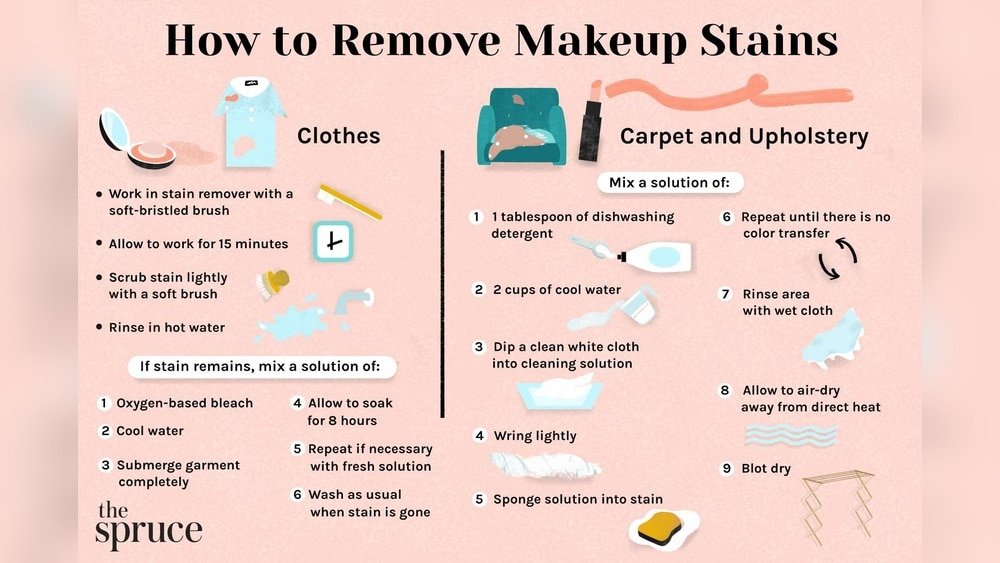
Step 1: Act Quickly
The faster you treat the stain, the better your results. If you let makeup dry or set with heat (from an iron or dryer), removal becomes much more difficult.
- Blot the stain gently with a clean paper towel or cloth. Do not rub, as this pushes makeup deeper into the fibers.
- If the makeup is powdered (like eyeshadow or blush), shake or brush off as much as possible before applying any liquid.
Step 2: Check The Clothing Label
Before you use any cleaner, check the care label inside your garment. Some fabrics, like silk or wool, need gentle treatment. Others, like cotton or polyester, can handle stronger cleaners. This helps you avoid damaging delicate items.
Step 3: Choose The Right Cleaning Agent
Different types of makeup and fabrics require different cleaning products. Here’s a quick reference:
| Makeup Type | Best Cleaning Agent | Safe for Delicates? |
|---|---|---|
| Foundation | Dish soap, shaving cream | Dish soap: Yes, test first |
| Lipstick | Rubbing alcohol, makeup remover | Alcohol: No, try makeup remover |
| Mascara/Eyeliner | Oil-free makeup remover, dish soap | Makeup remover: Yes |
| Powder | Liquid laundry detergent | Yes |
| Cream Blush/Highlighter | Dish soap, pre-wash spray | Dish soap: Yes, test first |
Step 4: Remove Excess Makeup
Before you treat the stain, always remove as much makeup as possible:
- Use a spoon, dull knife, or edge of a credit card to gently scrape off thick products like lipstick or concealer.
- For powders, use a soft brush (like a clean makeup brush) to sweep away loose particles.
Step 5: Pre-treat The Stain
Apply your chosen cleaning agent directly to the stained area.
For Foundation
- Add a few drops of dish soap to the stain.
- Gently work it in with your fingers or a soft toothbrush.
- Let it sit for 10 minutes.
For Lipstick
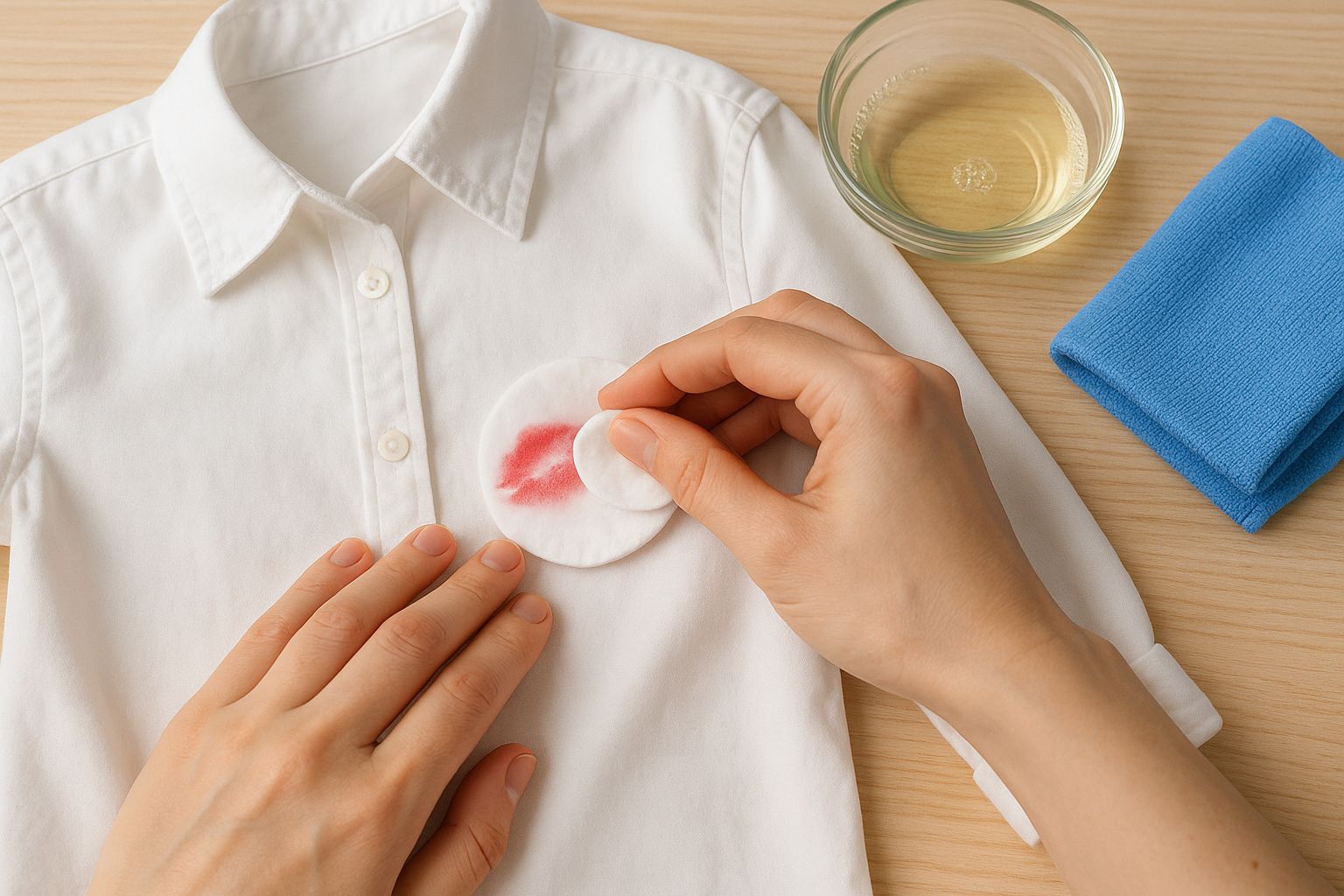
- Dampen a cotton ball with rubbing alcohol or oil-free makeup remover.
- Blot the stain. Do not rub.
- Repeat with a fresh cotton ball until the stain lifts.
For Mascara Or Eyeliner
- Dab with oil-free makeup remover on a clean cloth.
- Blot from the outside in to avoid spreading the stain.
For Powder
- Mix a bit of liquid laundry detergent with water.
- Apply to the stain and gently rub.
For Cream Blush Or Highlighter
- Use dish soap or a pre-wash spray.
- Gently work into the fabric, then rinse.
Step 6: Rinse With Cold Water
Always use cold water to rinse makeup stains. Hot water can set the pigment or oils. Rinse from the back side of the fabric to push the stain out, not deeper in.
Step 7: Wash Normally
Wash the garment as the care label recommends. Use the warmest water safe for the fabric. Check the stain before drying—heat can set any remaining makeup.
Step 8: Repeat If Needed
Some stains need more than one treatment. If the stain remains after washing, repeat the steps. Do not put the item in the dryer until the stain is gone.
Home Remedies And Household Products For Makeup Stains
You don’t always need special stain removers. Many common household products can be very effective.
Dish Soap
Dish soap breaks down oils and grease. It’s safe for most washable fabrics and works well on foundation, concealer, and cream blush. Apply directly to the stain, let it sit, then rinse.
Shaving Cream
Regular white shaving cream (not gel) contains surfactants that lift out makeup. Spray a small amount on the stain, rub gently, and let it sit for 10–15 minutes before rinsing.
Rubbing Alcohol
Rubbing alcohol is excellent for lipstick and ink stains. It dissolves pigment and oil. Be cautious on delicate fabrics—test on a seam first.
Hydrogen Peroxide
Hydrogen peroxide works for protein-based stains (like mascara or old blood). Use 3% solution. Apply, let bubble for a few minutes, then rinse. This can bleach colored fabrics, so always test first.
Baking Soda Paste
Mix baking soda with a little water to make a paste. Apply to oily stains and let sit for 15–20 minutes before rinsing. Baking soda absorbs oils and can gently scrub away residue.
White Vinegar
White vinegar removes odors and helps fade stains. Mix with water (1:1), apply to the area, and rinse well. Good for powder stains and as a follow-up rinse.
Commercial Stain Removers
Products like Shout, OxiClean, or Tide To Go pens can work wonders. Follow package instructions and always test on hidden fabric.
Removing Makeup From Different Types Of Fabric
Not all fabrics react the same way to cleaning agents. Here’s how to handle the most common types:
Cotton
Cotton is durable and can withstand most stain removers and warm water. Use dish soap, detergent, or stain remover. Scrubbing is usually safe.
Polyester
Polyester resists water-based stains but can hold on to oils. Use dish soap or rubbing alcohol. Wash in warm water.
Wool And Silk
These are delicate fabrics. Avoid strong chemicals or scrubbing. Use gentle dish soap, makeup remover (without oil), or special wool/silk detergent. Blot instead of rub.
Linen
Linen is strong but may wrinkle. Use gentle dish soap or laundry detergent, and do not use bleach.
Synthetic Blends
Treat like polyester but avoid high heat, which can melt fibers.
| Fabric Type | Safe Cleaners | What to Avoid |
|---|---|---|
| Cotton | Dish soap, detergent, stain remover | None (usually safe) |
| Polyester | Dish soap, alcohol, detergent | Excessive heat |
| Wool/Silk | Gentle soap, makeup remover | Rubbing alcohol, hydrogen peroxide, scrubbing |
| Linen | Dish soap, detergent | Bleach |
| Blends | Dish soap, detergent | High heat, bleach |
Special Cases: Stubborn And Old Makeup Stains
Sometimes, a stain remains after the first wash. Here’s how to tackle these tough cases:
Old Foundation Or Concealer Stains
- Make a paste of baking soda and water and let it sit on the stain for 30 minutes.
- Scrub gently with a soft brush.
- Rinse with cold water, then apply dish soap and rewash.
Set-in Lipstick
- Place the fabric stain-side down on a paper towel.
- Dab the back with rubbing alcohol using a sponge.
- Change paper towels as they absorb the lipstick.
- Wash as usual.
Waterproof Mascara
- Apply a few drops of oil-free makeup remover and let it sit for 5 minutes.
- Gently blot and rinse.
- If needed, use a drop of dish soap and wash again.
When All Else Fails
Some stains are so stubborn that professional dry cleaning is needed—especially for delicate or expensive items. If you’ve tried everything and the stain persists, take the item to a cleaner and explain what caused the stain and what you’ve tried.
Common Mistakes To Avoid
Many people make the stain worse by acting too quickly or choosing the wrong method. Here are common pitfalls:
1. Rubbing The Stain
Rubbing spreads the makeup and pushes it deeper into the fibers.
2. Using Hot Water First
Hot water can set oil and pigment, making the stain permanent.
3. Mixing Chemicals
Never mix ammonia and bleach or use harsh products on delicate fabrics.
4. Skipping The Test
Always test your cleaning agent on a hidden seam to avoid bleaching or damaging the fabric.
5. Drying Before Stain Is Gone
The dryer’s heat sets any remaining makeup, making future removal nearly impossible.
6. Over-scrubbing Delicates
Delicate fabrics like silk or wool can easily be damaged by scrubbing or strong chemicals.
Practical Tips For Preventing Makeup Stains
Prevention is often easier than removal. Here are smart tips to avoid stains:
- Dress after applying makeup. Let makeup set before putting on clothes.
- Use a towel or scarf. Drape over your clothes when putting on or touching up makeup.
- Choose transfer-resistant makeup. Many brands offer formulas that are less likely to rub off.
- Keep stain wipes or pens handy. In your bag or car, these can help treat stains right away.
- Wash stained clothes soon. Don’t let the makeup set for days.
- Remove makeup before changing clothes. Especially important after a long day or before sleep.
Real-world Examples
Let’s look at a few scenarios and the best way to handle them.
Example 1: Foundation Spill On White Shirt
You’re late for work and spill liquid foundation on your white blouse. Instead of rubbing, you blot with a paper towel, apply dish soap, let it sit for 10 minutes, and rinse in cold water. After washing, the shirt looks as good as new.
Example 2: Lipstick On Silk Scarf
A swipe of red lipstick lands on your silk scarf. You gently lift the excess with a spoon, dab with oil-free makeup remover, and blot—no rubbing. After washing by hand with gentle soap, the stain is gone.
Example 3: Mascara On Pillowcase
You forget to remove mascara and wake up to a black stain on your pillowcase. Dab with makeup remover, rinse, apply dish soap, then wash in warm water. The pillowcase comes out clean.
How Makeup Stain Removers Compare
With so many products and methods, which actually work best? Here’s a quick comparison.
| Remover Type | Best For | Pros | Cons |
|---|---|---|---|
| Dish Soap | Foundation, concealer, cream blush | Cheap, effective, safe for most | May not fully remove pigment stains |
| Rubbing Alcohol | Lipstick, ink | Strong on pigment | Can damage delicates |
| Shaving Cream | General makeup stains | Gentle, easy to apply | Less effective on oils |
| Hydrogen Peroxide | Protein-based stains | Removes tough stains | Can bleach fabric |
| Commercial Stain Remover | All types | Convenient, powerful | Cost, chemical smell |
Non-obvious Insights Most People Miss
- The direction you rinse matters. Always rinse from the back of the stain toward the front. This pushes makeup out of the fabric, rather than deeper in.
- Let cleaning agents sit long enough. Many people rinse too soon. Give dish soap, stain remover, or shaving cream at least 10–15 minutes to break down the stain.
- Some makeup removers can stain. Oil-based makeup removers might add a grease stain. Use only oil-free products for clothing.
- Powder stains can be made worse by water. Always brush off loose powder first. Water turns powder into a paste and spreads the stain.
- Old stains may need sunlight. After washing, let the item dry in indirect sunlight. The sun can naturally fade some leftover pigment.
When To Call A Professional
If you’ve tried several treatments without success, or if the fabric is very valuable or delicate (like vintage silk), don’t risk further damage. Professional cleaners have industrial solvents and know how to treat even the most stubborn makeup stains. Be honest about the type of makeup and what you’ve tried—they’ll have the best chance of saving your garment.
Frequently Asked Questions
What’s The Fastest Way To Remove Fresh Makeup Stains?
Act quickly! Blot, don’t rub, to remove as much makeup as possible. Apply dish soap or shaving cream, let sit for 10–15 minutes, rinse with cold water, then wash. The faster you treat the stain, the better your results.
Can I Use Makeup Remover On Clothes?
Yes, but choose oil-free makeup remover. Oil-based removers can leave a greasy mark. For delicate fabrics, oil-free removers are usually safe. Always test on a hidden area first.
Will Washing Alone Remove Makeup Stains?
Often, regular washing is not enough. Many makeup stains, especially foundation or lipstick, need pre-treatment with dish soap, stain remover, or alcohol before washing. Otherwise, stains may set and become permanent.
Is It Safe To Use Bleach On Makeup Stains?
Bleach should only be used on white, bleach-safe fabrics and never on delicate materials like silk or wool. For most colored clothes, bleach can damage fibers and fade color. Try gentler methods first.
Where Can I Find More Information About Stain Removal?
For a deeper look at stain removal science and methods, check out this resource from the Wikipedia – Stain Removal page.
Removing makeup from clothes is possible with the right approach and a bit of patience. Next time you spot a stain, you’ll know exactly what to do—and what to avoid—to keep your wardrobe looking its best.